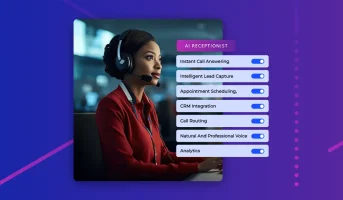
There’s a secret the AI industry doesn’t want you to know: the technology itself is becoming commoditized. ChatGPT, Claude, Gemini… The underlying AI models are increasingly similar. The same large language models power dozens of different products. The infrastructure is available to anyone with enough funding. And the best AI isn’t the smartest AI. It’s the AI that actually understands your industry. The AI that’s been built by a company with domain expertise.
The companies winning with AI aren’t the ones with the fanciest algorithms. They’re the ones who deeply understand the problems they’re solving.
The Allbirds Lesson
In April 2026, Allbirds, a wool sneaker company, announced they were pivoting to become “NewBird AI,” a GPU-as-a-Service provider.
No AI experience. No tech background. Just a rebrand and a stock pump.
The stock jumped 582%. Then reality set in.
Here’s what Allbirds got wrong:
They thought AI was a destination. It’s not.
AI is a tool. And like any tool, it’s only as good as the expertise of the person using it. A hammer in the hands of a master carpenter builds beautiful furniture. The same hammer in untrained hands builds… nothing.
AI works the same way.
What Domain Expertise Actually Means
Domain expertise isn’t just “we’ve been in business for a while.”
It means:
1. Understanding the Real Problems
Every industry has problems that outsiders don’t see.
In customer service, the obvious problem is “answer the phone.” The real problems are:
- How do you handle an angry caller without escalating?
- When should you transfer vs. take a message?
- What information does the business actually need from each call?
- How do you sound professional without being robotic?
You can’t solve problems you don’t understand. And you can’t understand them without years of experience.
2. Knowing What Data Matters
AI is only as good as its training data.
Companies with domain expertise know:
- What data to collect
- What patterns indicate success or failure
- How to label and structure data for AI training
- What edge cases to watch for
Generic AI companies have generic data. They build generic solutions. That’s why they often fail in specialized contexts.
3. Recognizing Edge Cases
Every industry has weird situations that outsiders never anticipate.
A medical office receptionist knows that “my pharmacy says there’s a problem with my prescription” requires different handling than “I need to schedule a checkup.”
An AI built by people who’ve never worked in healthcare won’t know that. It’ll treat every call the same and frustrate patients in the process.
4. Continuous Improvement
Domain expertise isn’t static. It evolves.
Companies embedded in an industry keep learning. They see new patterns. They adapt to changes. Their AI gets better over time because their understanding gets deeper.
Companies that pivot into an industry start from zero and have to learn lessons that established players learned years ago.
How to Evaluate AI Vendors: 5 Questions to Ask
If you’re considering an AI tool or vendor for your business, here’s how to separate domain expertise from marketing hype:
Question 1: How long have you been in this specific industry?
The question you should ask is not “how long have you been building AI?” That’s irrelevant.
What you should ask is: “How long have you been solving problems in my industry?”
The best answer includes years of experience, specific challenges encountered, and lessons learned. The worst answer is vague claims about “leveraging AI across multiple verticals.”
Question 2: What data does your AI train on?
Good AI requires good data. The best training data comes from years of real-world experience in the industry.
Ask questions like:
- How much data do you have?
- Where does it come from?
- How is it structured?
- How do you handle edge cases?
If they can’t answer clearly, their AI is probably generic.
Question 3: Who built this, and what’s their background?
Look at the team. Do they have experience in your industry, or are they generic tech people building generic tech products?
The best AI teams combine:
- Technical AI/ML expertise
- Deep industry knowledge
- Years of hands-on experience with the problems they’re solving
Question 4: Can you show me real-world results?
You don’t just want demos. Potential means nothing. You need to see actual outcomes from real customers.
Ask them for:
- Case studies with measurable improvements
- Customer testimonials specific to your industry
- Data on accuracy, efficiency, or cost savings
If they only have theoretical benefits, that’s a red flag.
Question 5: How do you handle situations your AI gets wrong?
All AI makes mistakes. The question is: what happens next?
Good AI companies have:
- Human fallback systems
- Continuous learning from errors
- Clear escalation paths
- Transparent error reporting
Generic AI companies often just say “the AI will learn over time” without explaining how.
The Hybrid Model: Why AI + Humans Beats AI Alone
Here’s another secret the “pure AI” companies won’t tell you:
The best AI systems keep humans in the loop.
IKEA deployed AI chatbots that handle 47% of customer inquiries. But instead of firing workers, they retrained 8,500 employees for higher-value roles. The result? $1.3 billion in new revenue.
The pattern is clear:
- AI handles routine, repetitive tasks
- Humans handle complex, nuanced situations
- Both get better at their jobs
This isn’t a compromise; it’s the optimal approach.
Companies that promise “fully autonomous AI” for complex tasks are usually overpromising. The real winners are the ones who understand where AI excels and where humans are irreplaceable.
What This Means for Small Businesses
If you’re a small business owner evaluating AI tools, here’s your checklist:
✅ Look for industry experience, not just AI capabilities
A company that’s been solving your specific problems for years will build better AI than a generic tech company with fancier algorithms.
✅ Ask about training data
Good AI comes from good data. The best data comes from years of real-world experience in your industry.
✅ Demand real results
Case studies. Measurable outcomes. Specific improvements. If they can’t show you these, they probably don’t have them.
✅ Verify the hybrid approach
Does the AI have human fallbacks for complex situations? The best systems do.
✅ Be skeptical of sudden pivots
If a company wasn’t in your industry yesterday, be cautious about them claiming expertise today.
The Bottom Line
AI is powerful. But AI without domain expertise is just expensive guessing.
The companies getting AI right are the ones who understand this:
Technology is the tool. Expertise is the craftsman.
When you’re evaluating AI for your business, don’t just ask “how smart is your AI?”
Ask: “How well do you understand my industry?”
The answer will tell you everything you need to know.
The Key Takeaways on Domain Expertise and AI
- Domain expertise beats raw AI capability for solving real business problems
- AI is a tool — it’s only as good as the expertise behind it
- Training data matters — and the best data comes from years of industry experience
- Hybrid models win — AI + humans outperforms AI alone
- Ask hard questions — industry experience, data sources, team background, real results
At Abby Connect, we’ve spent 20 years mastering customer communications. Our AI is built on millions of real conversations, not generic algorithms. That’s why it actually works for the businesses we serve.
AI catches every call. Humans close every deal. That’s the power of domain expertise + AI technology.
See how it works and learn more about how the Abby AI Receptionist helps businesses with our technology.